CesiumAstro Raises $730 Million, Plans 737 Satellites and 550 Jobs
Austin's CesiumAstro closed a $730 million Series D at a valuation above $4.5 billion. Who invested, the 737-satellite plan and the 550 new jobs.
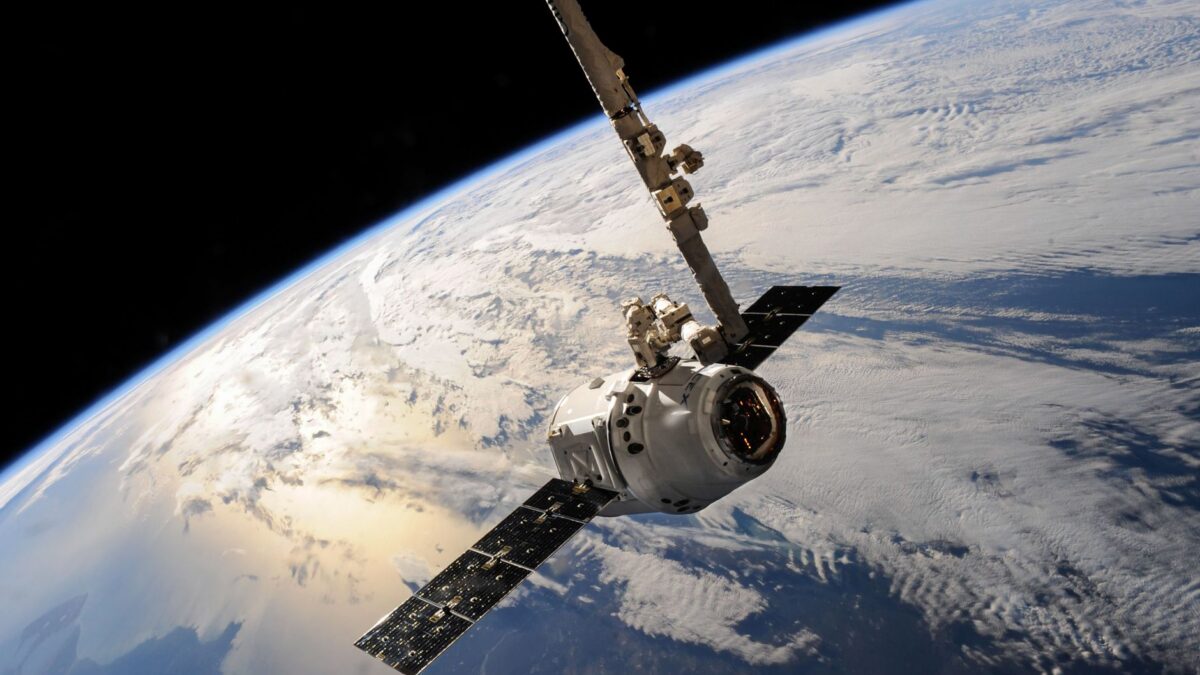
CesiumAstro, an Austin-area space company, closed a $730 million Series D funding round led by Janus Henderson that values it at more than $4.5 billion, the company said in a press release on Nov. 5. It also plans to add 550 jobs in the Austin area.
The money will help CesiumAstro move from selling satellite parts to running its own network: Synchronicity, a planned constellation of 737 AI-enabled satellites. Bloomberg also reported the raise.
Who put money into the Series D
Janus Henderson led the round. Other investors named by the company are Insight Partners, Sands Capital, Sumitomo Corporation of America, Toyota’s Woven Capital, Incharge Capital, Magnetar, AV and NewSpace Capital.
A Series D is a late-stage venture round, usually raised by a company that already has products and customers. CesiumAstro closed a $470 million Series C in February, so this is its second large round this year.
The company also arranged $100 million in debt financing through the Export-Import Bank of the United States and JPMorgan. Counting that loan money, CesiumAstro says it has announced more than $1.2 billion in capital for 2026.
From parts supplier to satellite operator
Until now, CesiumAstro has built phased-array communications payloads (antennas that steer radio beams electronically, without moving parts), software-defined radios and complete satellites. Its customers are commercial companies, governments and defense agencies.
Synchronicity is meant to change that role. The satellites would use Ku-, Ka- and V-band radio frequencies and serve commercial, sovereign and defense missions. The company said its Element-1 spacecraft went up and began operating in October. It is the first of eight planned spacecraft, and launches for the other seven are already booked. CesiumAstro has not said when it expects the full constellation of 737 satellites to be in place.
What it means for Austin jobs
The 550 new jobs are part of a $500 million, five-year expansion of the company’s headquarters. That plan includes buying 270,000 square feet of manufacturing space. CesiumAstro expects its Austin-area workforce to pass 1,000 people by 2030.
Founder and CEO Shey Sabripour said the company’s technology has been “proven on orbit, on the ground and in the air,” according to the release.
For job seekers in Central Texas, the hiring adds to a regional space industry that, according to Silicon Hills News, already includes Firefly Aerospace and Blue Origin’s planned campus in Hutto. For the company’s investors, the valuation above $4.5 billion sets the price for this round; CesiumAstro did not disclose revenue or a timetable for profits.
What to watch next
The next concrete milestones are the seven remaining spacecraft launches the company says it has secured, and progress on the headquarters expansion and the manufacturing space purchase. CesiumAstro has given 2030 as the target for its local headcount to top 1,000.
The funding news landed a day before Tesla CEO Elon Musk said on X that Tesla will start winding down Cybertruck production at its Austin plant around mid-2027 to free space for its Cybercab robotaxi, according to CNN. CNN’s report did not address the effect on jobs at Giga Texas.
Source: Silicon Hills News