Science Corp. Raises $400 Million at $3.5 Billion Valuation
Brain implant startup Science Corp. raised a $400 million Series D led by Khosla Ventures. The money backs a U.S. launch of its PRIMA vision implant.
Science Corp., a brain-computer interface company, has raised $400 million in a Series D round that values it at $3.5 billion, SiliconANGLE reported. The startup announced the round in a blog post.
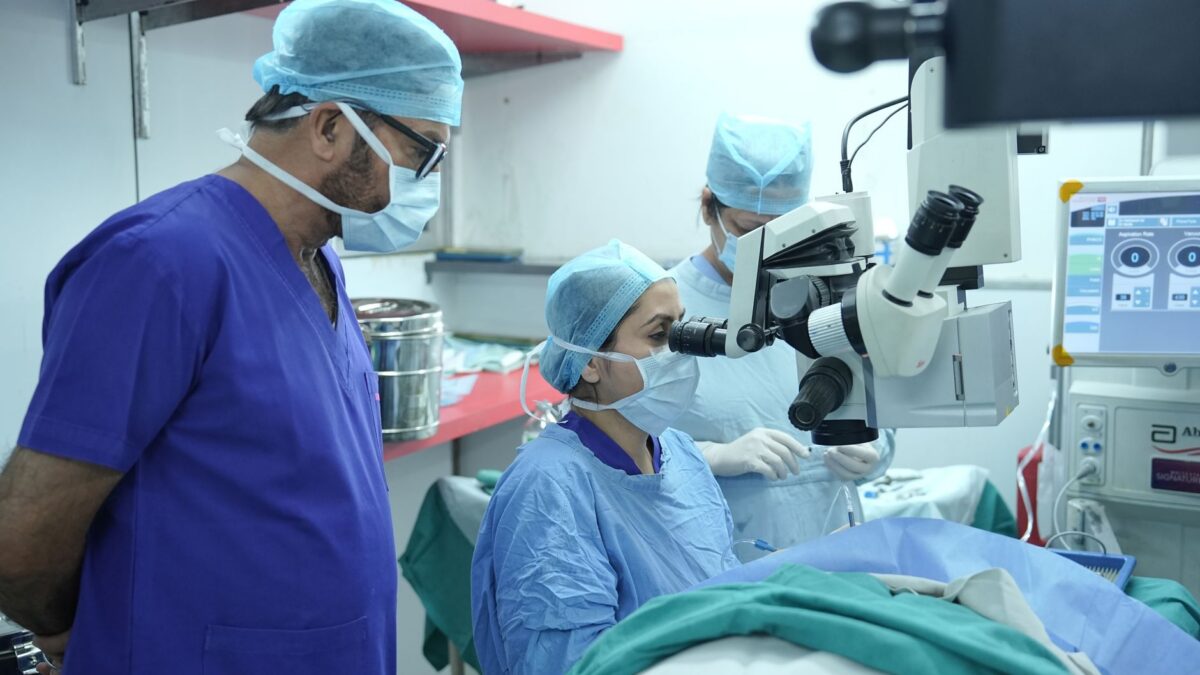
Most of the money is meant to bring PRIMA, an eye implant for people losing their sight to age-related macular degeneration, to patients in the United States. The device is already in use in Europe and is under review by the Food and Drug Administration.
Who put money into the Series D
Khosla Ventures led the round. The other investors were the Ackman Oxman Institute, Tenet Healthcare, 885 Capital, Y Combinator and PLC Neurotech.
SiliconANGLE noted that the Ackman Oxman Institute appears to be making one of its first investments. Hedge fund billionaire Bill Ackman and his wife, Neri Oxman, set up the brain research center earlier this year.
Science did not say how the new money would be split among its projects beyond the U.S. push for PRIMA.
What PRIMA does
Age-related macular degeneration, often shortened to AMD, is among the most common causes of vision loss in older adults. PRIMA is a small chip surgeons place in the patient’s eye. It has 378 pixels, and each one carries a tiny electrode.
The patient also wears a pair of glasses with a forward-facing camera. The glasses turn what the camera sees into infrared signals. When that light hits a pixel on the implant, the electrode stimulates cells in the retina, standing in for tissue the disease has destroyed. The camera lens filters out interference such as strong sunlight. The goal is to restore partial vision.
Where the device is available now
Several patients in Germany have already received the implant, and the company has dozens more surgeries on the calendar, according to SiliconANGLE. Science expects PRIMA to reach Italy, France and the U.K. in the coming months.
In London, the company plans to offer the device to patients willing to pay out of pocket at a dedicated unit at Moorfields Private Eye Hospital. It has not disclosed the price.
What it means for U.S. patients
Science is seeking FDA clearance through the Humanitarian Device Exemption pathway. That route can speed approval of experimental devices that treat rare conditions. AMD itself is not rare, but the company has argued that cases affecting both eyes are.
Founder and Chief Executive Max Hodak, who previously ran Elon Musk’s Neuralink, told Bloomberg he hopes PRIMA will be available to U.S. patients early next year. The FDA has not yet made a decision.
Science also plans to offer PRIMA later for Stargardt’s disease and retinitis pigmentosa, two other conditions that cause blindness.
The Biohybrid brain implant
The company’s longer-term project is the Biohybrid implant, which connects directly to the brain. It combines cultured neurons with silicon chips and is designed to join the brain’s own circuits.
Testing so far has been limited to animals. Science says it has picked the first disease it wants to treat with the device but has not named it. It hopes to begin its first human clinical trials within the next 16 months and has brought in Yale neurosurgery professor Murat Günel for that work. Günel has said in the past that the technology could help treat Parkinson’s disease and other brain illnesses and injuries.
What to watch next
The next milestones are the FDA’s ruling on PRIMA under the humanitarian exemption, the device’s launch in Italy, France and the U.K., any disclosure of the London price, and the start of human trials for Biohybrid.
Source: SiliconANGLE