Anthropic’s S-1: Why $17B in Revenue Came With a $23B Loss
A $21.9 billion non-cash charge on Amazon-held convertible notes drives most of Anthropic's Q3 loss. The filing's numbers, control structure and lock-ups.
Anthropic’s IPO filing shows $17.0 billion of revenue for July through September 2026 and a $23.3 billion net loss for the same three months. Most of that loss is not cash: it comes from convertible notes that Amazon bought in 2023 and 2024.
Watch on YouTube. The four-minute explainer is on our Dealsheet News channel. It is a simplified 3D animation; this article adds the detail and the sources. The figures below are from Anthropic’s S-1/A Amendment No. 2, filed Nov. 10, 2026, unless another source is named, and are as of Sept. 30, 2026. Before that filing, the offering terms were a plan; the company later priced the IPO at $83 a share, as covered in our companion piece on the revenue and compute numbers.
What was Anthropic offering?
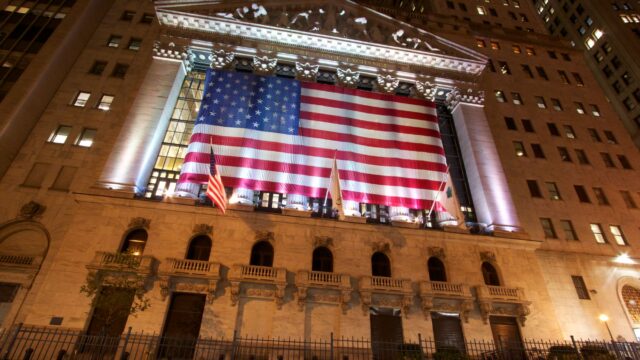
The cover page lists 825,000,000 Class A shares at an expected price of $70 to $78: 801,351,354 from the company and 23,648,646 from selling stockholders. They were to list on the Nasdaq Global Select Market under the ticker ANT. CNBC reported, citing people familiar with the deal, that pricing was planned for Nov. 18 and trading for Nov. 19; those people were not authorized to speak publicly, so treat the dates as reporting, not a filing.
Alongside the public offering, the filing describes $26.0 billion of non-voting Class N shares sold privately at the IPO price to seven chip and cloud companies: about $10.0 billion each from Google and Nvidia, about $2.5 billion from AMD, about $1.0 billion each from Broadcom, Micron and Microsoft, and about $500 million from TSMC. At the $74 midpoint, the company estimated net proceeds of about $84.6 billion including that placement, or $93.7 billion if underwriters take their full option.
Why is the loss bigger than the revenue?
Revenue for the first nine months of 2026 was $33,242 million against $2,545 million a year earlier, about 13 times as much. Yet the net loss for those nine months was $104,039 million. Of that, $94,324 million was a change in the fair value of convertible notes and similar instruments. The Q3 loss includes a $21.9 billion non-cash charge of the same kind, according to the free writing prospectus Anthropic filed on Nov. 12.
The notes explain it. Amazon bought convertible notes in 2023 ($1.2 billion in September 2023 and $3.4 billion in March 2024) and under a 2024 agreement of up to $4.0 billion in installments. The first batch converts at the lower of $20.9280 a share or the price of the latest funding round. At Sept. 30, 2026, $6,203 million of principal was outstanding, which could convert into 1,840,444,962 Class N shares. At the $74 midpoint that is about $136 billion, our arithmetic, not a figure from the filing.
The notes are carried at market value. In the company’s words, “increases in our enterprise valuation drive increases in this expense,” and it will keep recognizing the changes until the notes convert, are repaid or are settled. As the company becomes more valuable, what it owes the note holders on paper rises, and the difference lands in the loss. The IPO itself converts $579.3 million of the notes into 276,827,518 Class N shares; the rest, about $5.6 billion by our subtraction, stays outstanding and converts each quarter within set limits.
What does the business look like without that charge?
Operating loss for the nine months was $1,260 million. On the company’s adjusted measure, which is not a GAAP number, adjusted operating income was $2.5 billion in the third quarter, a 15% margin, against $2.2 billion and 19% in the second. The adjustment leaves out stock-based compensation ($3.3 billion in the nine months), non-cash charitable contributions and the Bartz copyright settlement.
How big is the compute bill?
Compute and infrastructure cost $18,808 million in the nine months, more than half of revenue. The company reports about $900.9 billion of purchase commitments, substantially all for compute and infrastructure: $451.6 billion due through 2030, the rest from 2031 to 2045, and $70.7 billion within 12 months of Sept. 30. That is roughly $194 million a day (our division). Cash and short-term investments were $131,845 million. The filing also warns that run-rate revenue growth is expected to “decline over time,” possibly “significantly.”
Several suppliers are also investors and customers. The filing says this “creates complex dynamics that could give rise to conflicts of interest.”
Who controls Anthropic?
Class A shares carry one vote. A single Class F share, held by a limited liability company formed by the seven co-founders, equals 50.1% of the total voting power. A Long-Term Benefit Trust elects, through Class T shares, directors who will make up a majority of the board. Anthropic is a public benefit corporation, so it must balance stockholders’ financial interests with other stakeholders’ interests and its stated public benefit. A risk factor says the structure “may effectively eliminate the ability of holders of our Class A common stock to influence important decisions, including a change in control.”
Lock-ups differ by holder. The co-founders and holders of more than 0.5% are restricted until the earlier of the second trading day after Q3 2027 results or 365 days; most others until after Q1 2027 results or 180 days. Up to 316 million Class A shares can be sold from the first trading day.
What did investors say?
Gil Luria of D.A. Davidson told CNBC that Anthropic “is still the main AI company, and it’s a pure play.” Janus Henderson’s Denny Fish called it “a generational moment.” Roger McNamee of Elevation Partners said to view the S-1 “as speculative fiction because it’s a great story,” and New Constructs called it “the most ridiculous IPO of 2026.”
The four-part Shorts cut
- Part 1: Anthropic took in $17B and lost $23B in three months
- Part 2: Anthropic’s numbers without the paper loss
- Part 3: One share, 50.1% of the votes
- Part 4: Why investors are split
This article explains company filings and published opinions. It is not investment advice, and nothing here is a recommendation to buy or sell any security.
Sources: Anthropic, PBC, Form S-1/A No. 2 (SEC, Nov. 10, 2026); Free writing prospectus (SEC, Nov. 12); CNBC, Nov. 10; CNBC, Oct. 27.