Is a Non-Compete Enforceable After a Layoff? Rules by State
What happened to the FTC rule, which states void non-competes or cap them by pay, the states with special layoff rules, and how non-solicit and garden-leave clauses differ.
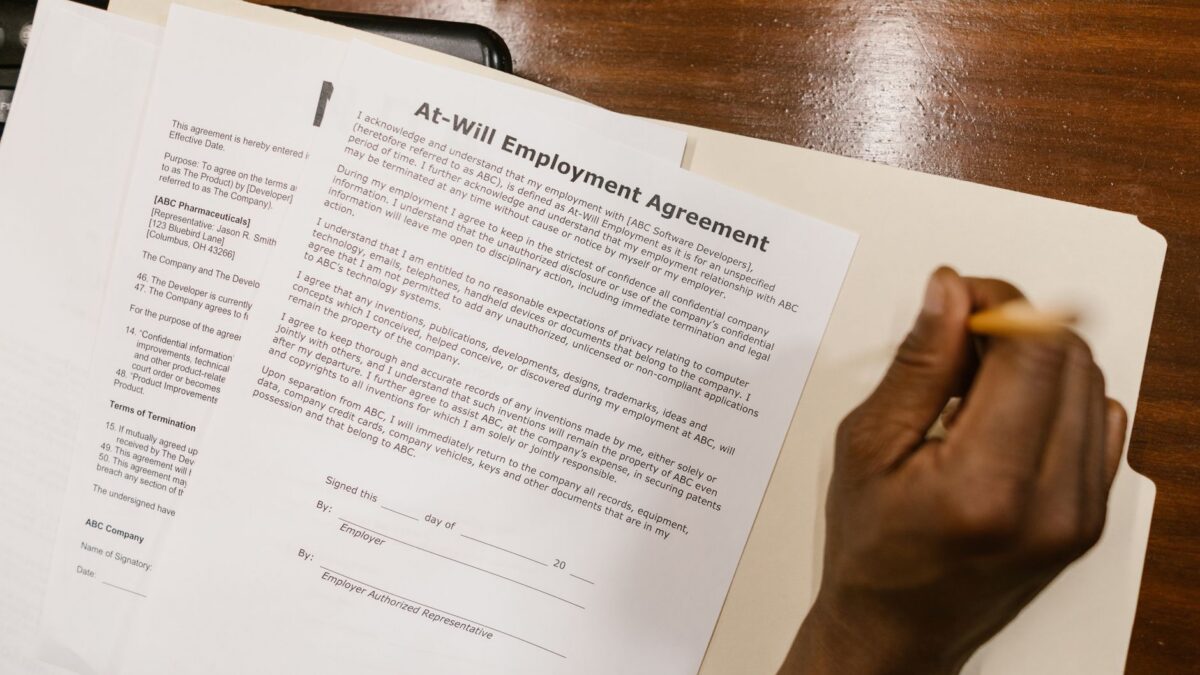
Whether a non-compete binds you after a layoff depends on state law, because the FTC’s nationwide ban never took effect. California, Minnesota, North Dakota and Oklahoma void most non-competes. Massachusetts bars enforcing one against a laid-off employee, and Washington allows it only if the employer keeps paying base salary. Your agreement’s governing-law and termination clauses, read with your state’s statute, give the answer.
Did the FTC ban non-compete agreements?
No ban is in force as of November 2026. The FTC adopted a rule in 2024 that would have banned most worker non-competes, but a federal court in Texas set it aside nationwide in August 2024 (Ryan, LLC v. FTC). On September 5, 2025, the Commission voted 3-1 to dismiss its appeals and accept that ruling, according to its press release. The FTC said it would pursue specific non-competes it considers unfair case by case instead. For employees, that leaves state law and the contract itself.
Which states ban or limit non-competes?
A growing number of states void non-competes outright or allow them only above a pay threshold. The table covers the main rules as of November 2026; most bans have exceptions, especially for the sale of a business.
| State | Rule for employees | Source |
|---|---|---|
| California | Void, with narrow exceptions such as the sale of a business; the state also bars enforcing them against California workers no matter where the contract was signed | Bus. & Prof. Code 16600 and 16600.5 |
| Minnesota | Void for agreements made since July 1, 2023, except in the sale or dissolution of a business | Minn. Stat. 181.988 |
| North Dakota | Void, except in the sale of a business or dissolution of a partnership | N.D. Cent. Code 9-08-06 |
| Oklahoma | Void, but an agreement not to solicit established customers is allowed | 15 Okla. Stat. 219A |
| Wyoming | Void for contracts signed on or after July 1, 2025, with exceptions for executive and management personnel and their professional staff, trade secrets and sale of a business | Wyo. Stat. 1-23-108 |
| Washington | Void unless 2026 earnings exceed $126,858.83; a near-total ban takes effect June 30, 2027 | RCW 49.62; HB 1155 (2026) |
| Colorado | Void unless pay is at least the “highly compensated” threshold, reported as $130,014 for 2026, plus other conditions | C.R.S. 8-2-113 |
| Illinois | Void for workers earning $75,000 or less a year; rises to $80,000 on January 1, 2027 | 820 ILCS 90 |
| Massachusetts | Allowed with limits (12 months maximum, garden leave or other agreed pay), but not against employees laid off or fired without cause | M.G.L. c. 149, 24L |
Other states have their own limits, often protecting hourly or lower-wage workers, and many apply a reasonableness test to everyone else. A state labor department or employment attorney can tell you which rules reach your contract.
Does being laid off make a non-compete unenforceable?
In a few states, yes, by statute. Elsewhere it is a factor courts may weigh, not an automatic release.
- Massachusetts: the Noncompetition Agreement Act, for agreements signed since October 1, 2018, does not allow non-competes to be enforced against employees who are laid off or terminated without cause.
- Washington: under RCW 49.62.020, a non-compete cannot be enforced against an employee terminated as the result of a layoff unless the employer pays the employee’s base salary at termination for the enforcement period, minus what the worker earns in a new job. Washington’s Department of Labor & Industries publishes the yearly earnings threshold.
- Other states: a layoff does not release you automatically. Courts apply the state’s general test of whether the restriction is reasonable, and how the job ended can be one of the facts they consider.
Check your agreement for its own termination language too. Some contracts say the restriction applies “for any reason,” and others limit it to resignations or terminations for cause. If you were laid off, how the separation is documented can matter here, which is one reason to read laid off vs fired vs resigned before you sign separation papers.
What about non-solicit and confidentiality clauses?
These usually survive even where non-competes do not. A non-solicitation clause bars you from pursuing the former employer’s customers or recruiting its staff for a period, without stopping you from working for a competitor. Several states treat them separately: Oklahoma’s statute expressly allows customer non-solicits, Minnesota’s ban excludes them, and Illinois voids non-solicits only for workers earning $45,000 or less (rising to $47,500 in 2027). Colorado sets a customer non-solicit threshold at 60% of its non-compete threshold.
Confidentiality and trade secret obligations apply everywhere, contract or not, under state trade secret laws and the federal Defend Trade Secrets Act.
What is a garden-leave clause?
Garden leave means the employer keeps paying you during a notice period or restricted period while you stay out of the market. In Massachusetts, a valid non-compete must be supported by garden leave of at least 50% of your highest annualized base salary in the prior two years, paid through the restricted period, or by other consideration the parties agree to in the contract. Elsewhere, garden leave is a contract term the employer offers, not a legal requirement.
What should you do with a non-compete after a layoff?
- Find the signed agreement, including any later versions signed with equity grants, which often carry their own restrictions.
- Note the governing-law state, the length and geographic scope, and what triggers the restriction.
- Check whether your severance agreement repeats, narrows or releases the non-compete; see severance pay rules.
- Ask a prospective employer whether it has a process for reviewing non-competes; many do.
- For a specific job offer, an employment attorney can assess enforceability under your state’s law.
Bottom line
A severance agreement is the moment to deal with a non-compete: employers sometimes agree to waive or shorten it in exchange for the release they want, and once you sign, the agreement’s terms usually control. Look for any clause in the severance papers that “reaffirms” earlier restrictive covenants, because signing it keeps them in force and can add new terms.
FAQ
Is my non-compete void because the FTC banned them?
No. The FTC rule was set aside in 2024 and the agency dropped its appeal in September 2025, so it never took effect. State law decides.
Can my old employer sue me if I join a competitor?
It can try where the agreement is enforceable under state law. In states that void non-competes, such a suit is unlikely to succeed on the non-compete, though trade secret claims are separate.
Does a non-compete stop me from collecting unemployment?
No. Unemployment eligibility depends on why you lost the job and your search for work, not on a non-compete (see filing for unemployment after a layoff), though you must still meet your state’s work search rules.