Avicena Raises Over $100 Million in Series C for AI LED Links
Avicena, a Sunnyvale startup, raised over $100 million in a Series C led by InterVest to build LED data links for AI. Valuation was not disclosed.

Sunnyvale, California, company Avicena closed a Series C round of more than $100 million, announced Nov. 24 through Business Wire. The startup makes tiny LED-based links for moving data within AI systems. No valuation was given. Proceeds are earmarked for bringing its LightBundle platform to market.
The round in numbers
- More than $100 million: the amount raised. Series C rounds usually come later in a startup’s life, when it has shown technical progress and wants to scale.
- InterVest was the lead investor, AI Weekly reported, citing The Next Web. Its director John Dongwoo Ha is joining Avicena’s board.
- Silicon Valley Daily lists these participants: InterVest, Tiger Global, Cerberus Capital Management, SK hynix Ventures, Samsung Catalyst Fund, AMD Ventures, Prosperity7 Ventures, Diamond Edge Ventures and Hitachi Ventures.
- $25 million: Avicena’s Series A in 2022, with Samsung Catalyst Fund, Cerberus and Micron Ventures among the backers.
- 1 terabit per second: the rate of the LightBundle test kits that began shipping in August 2026. September 2026 brought a connectorized, plug-and-play version.
How the links work
Processors, memory and switches in AI systems exchange enormous volumes of data. Short runs typically use copper wire and longer ones use lasers. Copper loses speed as distance grows, while lasers draw considerable power and produce heat.
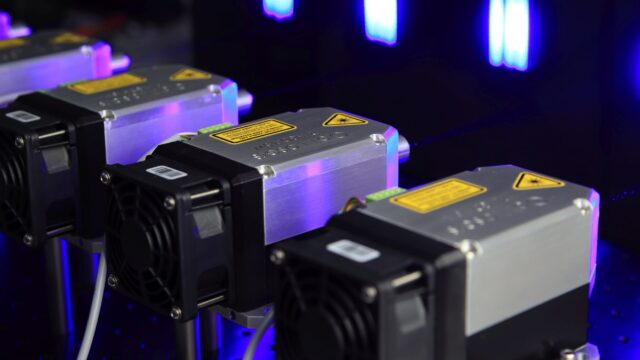
Avicena says LightBundle combines dense arrays of display-style microLEDs, silicon light sensors and multi-core fiber. AI Weekly described it as sending data over many slower channels where lasers use a few fast ones. Pulse 2.0 reported two target uses: “scale-in” links next to compute and memory chips, and “scale-up” links joining systems of AI accelerators.
Why it matters for AI infrastructure
Electricity supply is among the biggest limits on building more data center capacity for AI. A link that needs less power could let operators fit more hardware under the same ceiling. Backers SK hynix and Samsung produce the high-bandwidth memory in AI servers, and AMD designs AI chips.
Ha said, per Semiconductor Today: “Avicena’s progress is bringing microLED optical interconnects closer to practical deployment in AI infrastructure.”
What is still unproven
No production orders or named customers have been announced. The evaluation kits are meant to let prospective buyers test before purchasing. Rivals include long-established optics firms and chipmakers developing laser-based co-packaged optics that sit right beside the chip. Avicena has to demonstrate that microLEDs can equal or beat them on cost, reliability and performance at volume.
Operators often fix their designs years ahead, and a startup that misses one design cycle may wait for the next generation of systems. The first customer announcements, or a tie-up with a large chip or memory maker, are what investors will look for.
Source: vcpost.com