Humyn Labs Raises $47 Million Series A to Build Robot Test Sites
Physical AI startup Humyn Labs raised $47 million, $26 million in equity led by Accel plus $21 million in venture debt, to build robot test sites.
Humyn Labs, a physical AI research and deployment startup, has raised $47 million in a Series A round. The company said on Wednesday that it will spend the money on international expansion and on sites where robots can be tested and deployed in real working conditions.
The round is split into $26 million in equity and $21 million in venture debt. For a company founded in 2026, the size of the raise follows a fast start: Humyn Labs says its annualized revenue passed $50 million within six months of operations.
Who put in the money
Accel led the equity portion. Other participants named by Business Standard and Mint include Prosus Ventures, BeeGlobal, Finserv Intelligence through Bajaj Finance, the Bajaj Alts AI Opportunities Fund, Dallas Venture Capital, Jump Trading LLC and angel investor Anita Pramoda, a former CFO of Epic. Mint also lists Lighthouse Canton among the equity participants.
Lighthouse Canton led the $21 million venture debt, with Trifecta Capital taking part. Venture debt is a loan to a startup, repaid over time, that does not require selling as much ownership as an equity round does. For a primer on how rounds like this are labeled, see how startup funding rounds work.
In April, Humyn Labs announced a $20 million commitment to build human data infrastructure for physical AI companies worldwide.
What the company does
Physical AI refers to systems that let machines such as factory robots and robotaxis understand and act in the real world. Humyn Labs records how people carry out tasks in factories, warehouses, farms and homes, then turns the recordings into training data covering sight, sound, motion and touch. Its customers include frontier AI labs, robotics companies and world-model developers, and it collects data in more than 20 countries across Latin America, East Asia, and South and Southeast Asia.
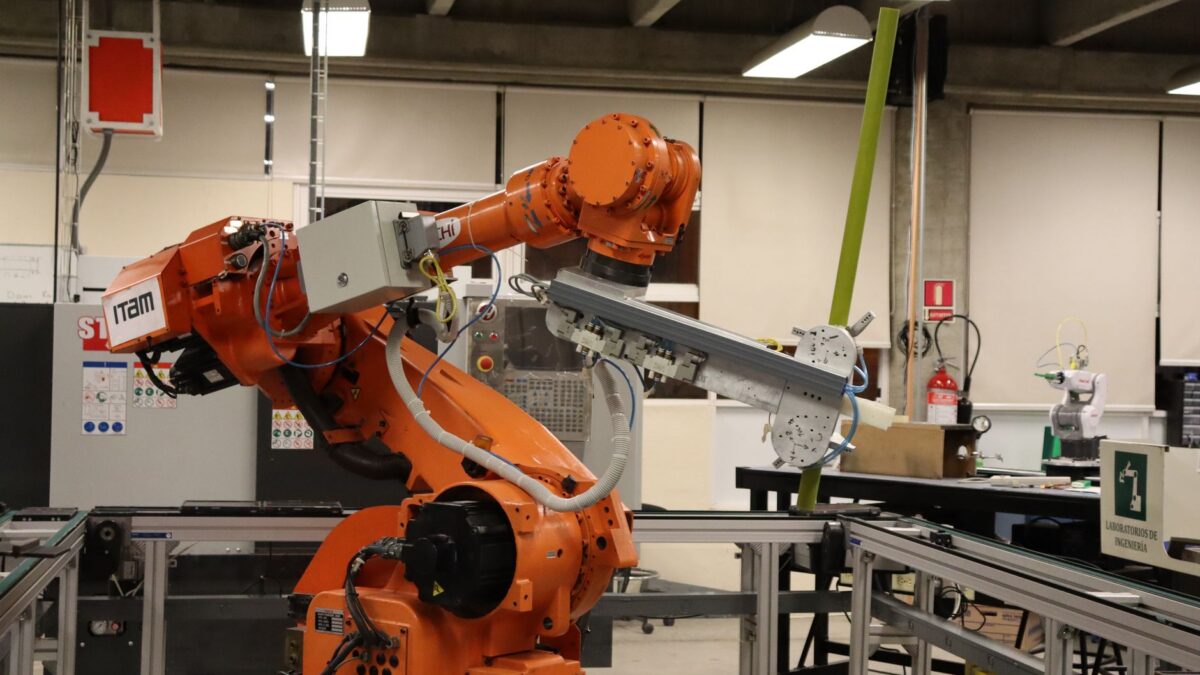
Co-founder Manish Agarwal told Business Standard that supplying data is only part of the job. Robotics companies also need to test their models and hardware in the field before they can deploy them. Humyn Labs plans to build dedicated deployment centers, which Agarwal called “robot gyms,” and to set up similar centers inside large enterprises’ own facilities.
Where the funds will go
The company plans to build deployment infrastructure in Brazil, South Korea and India, expand its data-capture hardware and processing, and strengthen its presence in San Francisco, London and Seoul. Mint reports that the facilities would be between 5,000 and 10,000 square feet, or located on partner companies’ premises, and would replicate warehouses, dark stores and factories. The number of sites has not been decided. Bengaluru is the first location, where the company wants to develop a deployment playbook it can repeat in markets such as Brazil and Vietnam.
Why it matters
Humyn Labs is headquartered in Bengaluru but has a US subsidiary, and around 95 per cent of its customers are in the US. According to Mint, it has 12 paying clients: nine in the US, one in Europe and two in India. It is putting San Francisco first among international markets, followed by London and Munich, then Seoul and Tokyo.
Agarwal said India is not an immediate priority for commercial robot deployment. In his view, deployment depends on the cost of the robot and on whether it performs tasks reliably, and the economics may not yet work for several use cases in India.
The company is aiming for $1 billion in revenue. Co-founder Ishank Gupta told Mint that he considers the physical AI market to be 10 times bigger than the market for large language models.
Others are chasing the same data. Mint notes that Provision Labs launched in the US in October, and that Instawork is using its India operations to gather training data with wearable cameras and sensors. A July 2026 Counterpoint Research report cited by Mint estimated that data collection and annotation services for physical AI in India could become a $10 billion opportunity by 2030.
Siddharth Sawant of Varyon Partners said Humyn reports more than 200,000 hours of first-person video across its global operations.
Sources: Business Standard, Mint