Shield AI Buys Radar Startup Echodyne in $5.3 Billion Defense Deal
Drone maker Shield AI agreed to buy Echodyne for $5.3 billion. Here is how the deal is paid, what happens to Echodyne staff, and the $2.5 billion raise behind it.
Shield AI, the defense startup that builds autonomous military drones, has agreed to acquire radar maker Echodyne in a deal valued at $5.3 billion, according to SiliconANGLE. Echodyne, which counts Bill Gates among its backers, makes compact radar that can spot small drones.
Shield AI is paying for the purchase with its own cash plus $2.5 billion from a Series H funding round led by Blackstone and JPMorgan Chase. The company announced that round on the same day as the acquisition.
How the $5.3 billion is paid
Not all of the money changes hands at once. According to the report, $4.8 billion will be paid when the deal closes. The remaining $500 million depends on Echodyne hitting performance targets, and those targets were not disclosed. This kind of conditional payment is often called an earnout: the seller gets the extra sum only if the business delivers agreed results after the sale.
No closing date or regulatory approval steps were disclosed.
What Echodyne makes
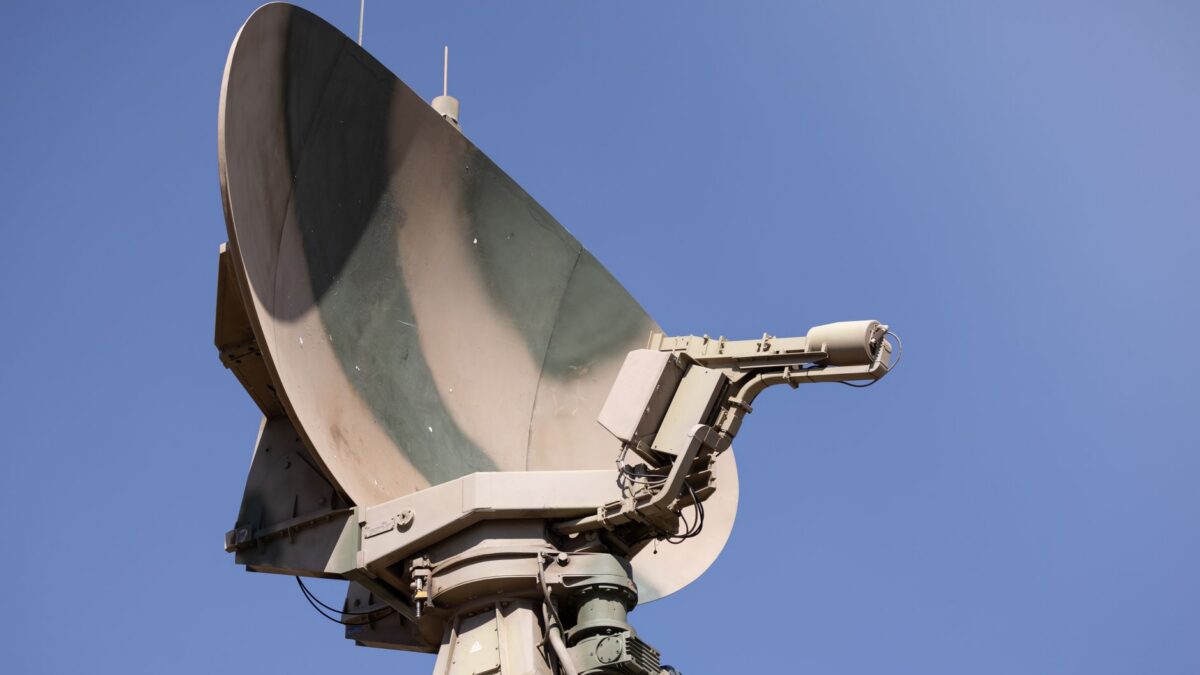
Echodyne has been around for 13 years. Its main product is a solid-state radar built on what it calls Metamaterials Electronically Scanned Array, or MESA, technology. Unlike older radar with moving parts, solid-state radar steers its beam electronically. Echodyne’s systems are designed to pick up much smaller objects than traditional radar can, including the small autonomous drones used in Ukraine and other recent conflicts, and they can be connected to many types of weapons and monitoring equipment.
A couple of months before the deal, Echodyne won a $250 million contract from JIATF-401, the U.S. Defense Department’s counter-drone task force, to supply drone tracking technology to the military.
What Shield AI gets
Shield AI builds the V-Bat and X-Bat, drones that take off and land vertically. The V-Bat helped the U.S. Coast Guard track drug smugglers using speedboats and took part in several large seizures at sea. The company also develops Hivemind, software that pilots unmanned aircraft, boats and spacecraft without a human at the controls.
Chief Executive Gary Steele said the purchase speeds up Shield AI’s plan to grow in three areas of unmanned systems. He described the company as having three business units, “autonomy software, autonomous systems and mission systems.”
Echodyne co-founder and CEO Eben Frankenberg said both companies believe autonomous machines need to sense their surroundings to do their jobs, which makes Shield AI a good fit.
What it means for Echodyne employees and customers
Steele said Echodyne will keep running as its own business unit inside Shield AI’s mission systems division. Frankenberg stays on and will report to Steele as a member of the senior leadership team.
For Echodyne’s workforce, Steele said there will be no layoffs and no one will be asked to move. Frankenberg said the combined company will be large enough to serve Echodyne’s defense, government and commercial customers around the world. Over time, the two companies plan to build Echodyne’s radar more tightly into Shield AI’s drones.
Shield AI’s earlier acquisitions
Shield AI has grown through purchases before. Its V-Bat and X-Bat drones rely heavily on technology from Martin UAV Systems, which it bought in 2021. In June, it acquired Aechelon Technologies, a developer of simulation and sensor modeling software, for a price it did not disclose.
Steele said the company may make more acquisitions as part of its growth strategy.
Source: SiliconANGLE