Why a Stock Trades Below the Announced Deal Price
The gap between the market price and the deal price is called the spread. It reflects time to closing and the risk that regulators, financing or a vote stop the deal.
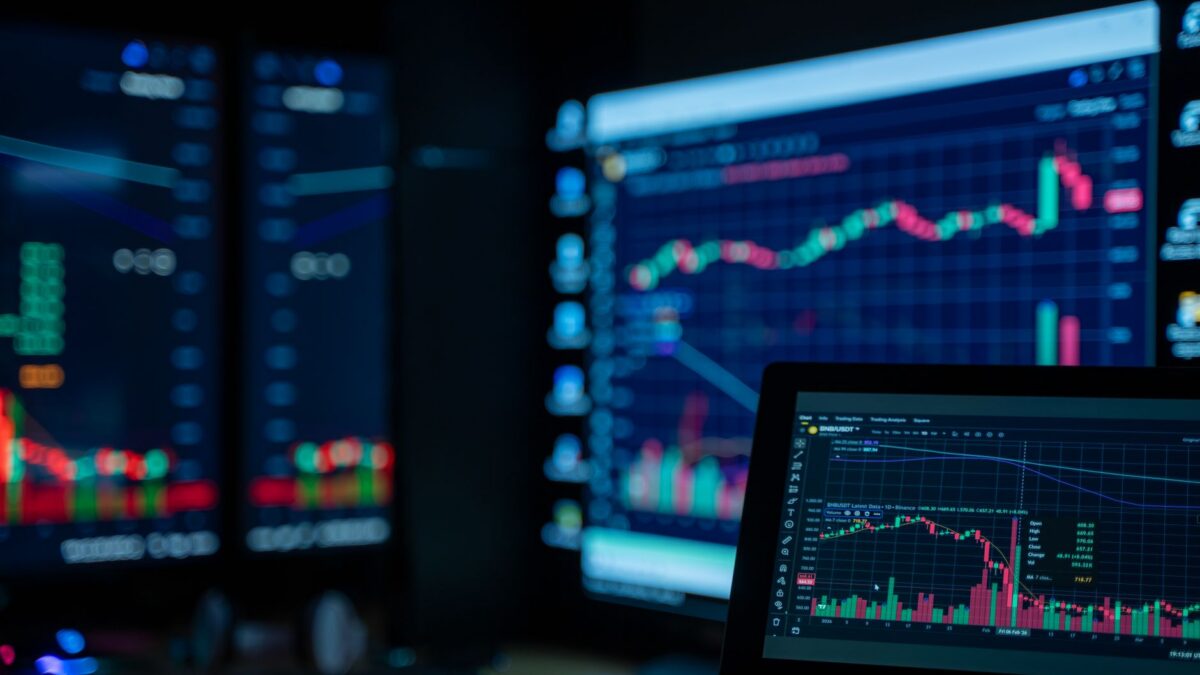
A company’s stock usually trades below the announced deal price because the money arrives later and the deal can still fall apart. The gap, called the merger spread, reflects the time until closing, the cost of waiting, and the market’s view of regulatory, financing and shareholder-vote risk. It can be calculated from the deal terms and the current share price.
This article explains how the spread works and how to read it from public numbers. It is not a trading guide, and nothing here suggests buying, selling or holding any stock.
What is a merger spread?
The merger spread is the difference between what the buyer has agreed to pay per share and what the target’s stock costs today. For a cash deal it is simply the deal price minus the market price.
An illustration with made-up numbers: a buyer agrees to pay $50.00 in cash per share and the target trades at $48.00. The spread is $2.00, or 4.2% of the current price ($2.00 divided by $48.00).
For a stock deal, first convert the offer into today’s dollars:
- Multiply the exchange ratio by the buyer’s current share price.
- Add any cash paid per share.
- Subtract the target’s current share price.
Because the buyer’s price moves every day, the value of a stock offer moves with it. That is why the dollar figure in the original announcement can differ from what the offer is worth on any later day.
Why doesn’t the stock jump all the way to the offer price?
Holders who buy at the market price give up the use of their money until closing and accept the chance that the deal fails. The spread pays for both.
| Source of the gap | What it reflects | Where to read about it |
|---|---|---|
| Time to closing | Months of waiting with cash tied up, compared with interest available elsewhere | “Expected to close in” date in the press release; outside date in the merger agreement |
| Antitrust and foreign review | The chance of a second request, a lawsuit or required divestitures | “Regulatory approvals” section of the proxy or 14D-9 |
| Shareholder approval | The chance the target or buyer vote fails | Proxy statement, voting agreements |
| Financing | Whether a buyer that borrows can fund the deal | Debt commitment letters, reverse termination fee |
| Business risk | A material adverse change that lets the buyer walk away | Conditions section of the merger agreement |
Our guide to how long a merger takes explains why closing dates slip.
How can a deal break, and what happens to the price then?
A deal breaks when a closing condition cannot be met, for example when regulators win a court order blocking it or shareholders vote it down. When that happens, the target’s stock no longer has the deal price behind it and usually trades on its own business again.
Kroger’s $24.6 billion plan to buy Albertsons is a recent example. On December 10, 2024, the US District Court for the District of Oregon granted the Federal Trade Commission’s request for a preliminary injunction blocking the deal (FTC statement), and the merger agreement was terminated that week. Our explainer on how the FTC and DOJ block mergers covers the legal steps.
A slower path ends differently. Synopsys’s $35 billion purchase of Ansys was signed on January 15, 2024 and closed on July 17, 2025, after the FTC required both companies to sell certain software tools to Keysight Technologies (FTC, May 28, 2025). For about 18 months, Ansys holders who held on waited for the cash-and-stock payout.
A termination fee, if one is owed, is paid from one company to the other and does not go to individual holders. The terms are summarized in our guide to breakup fees and go-shops.
How is the gap turned into an annual rate or an implied probability?
Analysts often restate the spread as an annualized return and as the probability of closing that the price seems to assume. Both are rough estimates that depend on assumptions.
Using the made-up numbers above, with closing expected in six months:
- Annualized spread: 4.2% for six months is roughly 8.3% a year (4.2% x 12 / 6, ignoring compounding).
- Implied probability: if the stock might fall to $35.00 should the deal fail, the price of $48.00 implies roughly an 87% chance of closing: ($48 minus $35) divided by ($50 minus $35).
The “fall-back” price is a guess. Many people use the undisturbed price, the last close before the deal leaked or was announced, but the business may have changed since then. A small spread therefore means the market sees little risk or little time left, and a wide spread means the opposite, without telling you which risk dominates.
Can a stock trade above the offer price?
Yes. A target can trade above the offer when the market expects a higher bid, a competing buyer or a better price after appraisal. In a stock deal, the gap can also flip briefly as both share prices move.
A price above the offer reflects expectations only. If no higher bid arrives, holders receive only the agreed price. For deals where a private equity firm is the buyer, the go-shop period and financing terms are explained in our guide to take-private deals.
Bottom line
To read a spread yourself, take three numbers from public sources: the per-share consideration in the 8-K, the expected closing date in the press release, and the current share price. Recompute the stock part every day if the buyer pays in shares, because a falling buyer price shrinks the offer even when nothing else changes.
FAQ
Why is the target trading below a cash offer that is already agreed?
The cash is paid only at closing, which can be months away, and conditions such as antitrust clearance or a shareholder vote still have to be met. The discount compensates for that waiting time and risk.
Does a wider spread mean the deal will fail?
Not necessarily. A wider spread can reflect a longer expected timeline, higher interest rates or a specific regulatory question, and the Ansys deal closed despite a long regulatory review.
What happens to my shares if the deal is blocked?
You keep them and they continue to trade. The price is no longer anchored to the offer, so it is set by the company’s own prospects.
Is the spread the same as a premium?
No. The premium compares the offer with the price before the announcement. The spread compares the offer with today’s price, after the announcement.