Astromech Buys Form Bio in $230 Million All-Stock Deal
Austin AI company Astromech bought fellow Colossal spinout Form Bio for $230 million in stock. Here is who leads, who stays and what the deal combines.
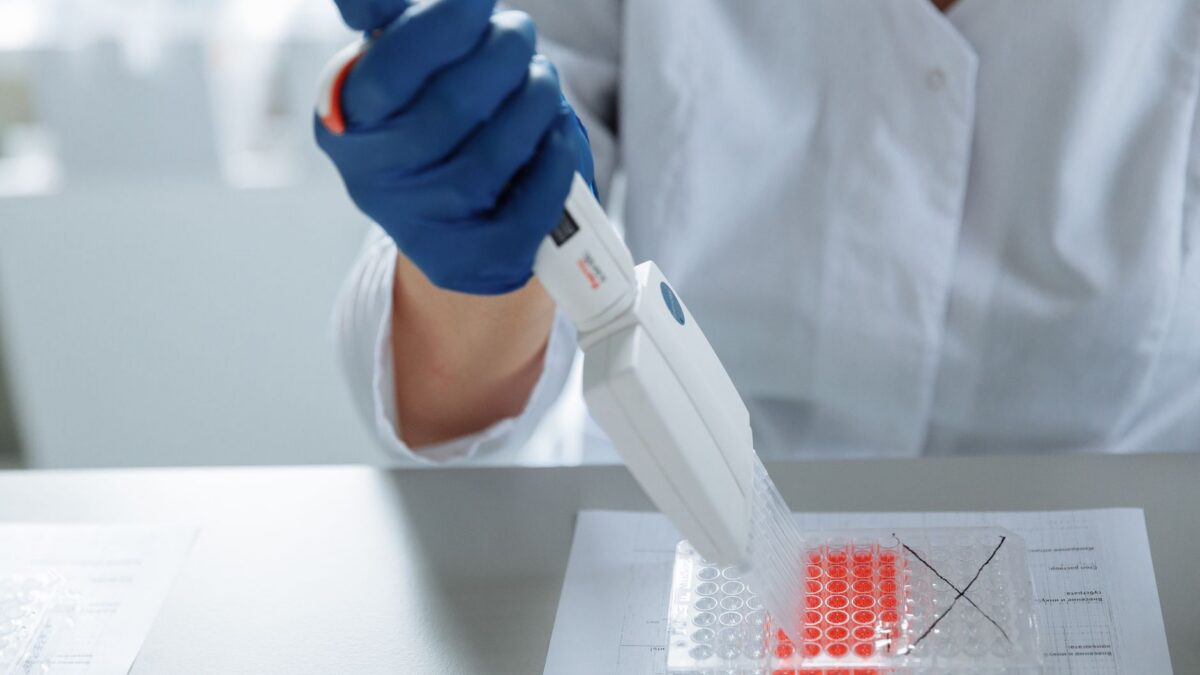
Astromech, an Austin AI startup that builds models to predict changes in living systems, has acquired Form Bio, a company that makes software for designing genetic medicines. The two companies said the all-stock deal is valued at $230 million, according to Dallas Innovates.
Both businesses were spun out of Dallas-based Colossal Biosciences, the de-extinction company. The purchase is Astromech’s first acquisition, and it brings Form Bio’s leadership and most of its technical staff into the buyer.
Who runs the combined company
Andrew Busey, Form Bio’s co-founder and CEO, is now Astromech’s chief AI officer and head of technology. Astromech said it kept Form Bio’s AI, engineering and product teams, and the combined company now has 65 employees.
In a statement, Busey said Form Bio started by working on computing problems that came up in de-extinction research and later moved to building foundation models for designing human therapies. Foundation models are large AI systems trained on broad data that can be adapted to many tasks. He said joining Astromech lets the team bring evolutionary insights into the design decisions researchers make.
What Form Bio brings
Form Bio launched in September 2022 and has raised more than $40 million in venture funding. Colossal co-founder Ben Lamm started it with Busey and entrepreneur Kent Wakeford.
The company has supported genetic medicine programs at Eli Lilly, Stanford University and clinical-stage biotech companies. Its partners include Taysha Gene Therapies of Dallas, Coave Therapeutics of Paris and Solid Biosciences of Charlestown, Massachusetts. Adrien Savy, director of discovery science at Coave, said Form Bio’s platform helps his team quickly evaluate and rank gene therapy designs across several programs.
One example came from work with Cure Rare Disease, a nonprofit biotech in Woodbridge, Connecticut, on Duchenne muscular dystrophy. By redesigning a promoter sequence (a stretch of DNA that controls when a gene switches on), Form Bio raised full-genome content from 13% to 59% in less than 30 days. That program has moved into preclinical studies in living organisms.
Astromech’s fast rise
Astromech came out of stealth mode in March. By August it had raised $60 million at a reported valuation of $3.8 billion, and it said then that the money would go toward a bigger research team, more infrastructure and more species in its functional genomic datasets.
With Form Bio’s tools in-house, Astromech said researchers will be able to go from spotting evolutionary patterns to designing and testing genetic constructs. Form Bio expects the approach eventually to produce therapies for both humans and animals.
What it means for the Colossal family of companies
The deal folds one Colossal spinout into another. Lamm and Harvard geneticist George Church co-founded Colossal in 2021, and it has become Texas’ first “decacorn,” a startup valued at more than $10 billion. In 2025 the company announced the birth of three animals it calls dire wolves, a species extinct for 12,500 years, and it is also working on the woolly mammoth, the Tasmanian tiger and the dodo.
Around that core, the founders have set up related businesses. Besides Form Bio and Astromech, Colossal spun out Breaking in 2024, a Cambridge, Massachusetts, company developing a microorganism called X-32 that breaks down plastics. The same year it launched The Colossal Foundation, which supports conservation work including a “biovault” of genetic information from species close to extinction.
For Form Bio’s investors and employees, the deal means their stake and their work now sit inside Astromech, since the price was paid in stock rather than cash. The companies did not disclose the exchange terms or how the shares were split.
Source: Dallas Innovates